
A Top Venture Firm Cut Knowledge Retrieval to Seconds
the challenge
One of the world's most active venture capital firms runs on institutional context: who the team has met, what was learned, and how it connects across a global portfolio. That context lived scattered across call recordings, memos, meeting notes, and CRM records. Reconstructing it for a single decision could take weeks of asking around, and a missed connection between two memos can change an investment outcome. The firm wanted that memory to be queryable by the people making decisions.
what they built
Lazer first built an AI-powered internal platform that cross-references the firm's notes against company and person data. On the strength of that delivery, the firm engaged Lazer to build a second, more ambitious system: an AI knowledge platform that ingests call recordings, memos, notes, and CRM data, then synthesizes them into a queryable knowledge base for the entire investment team, with automated relationship mapping across the portfolio.
The build moved from kickoff to production in months, including a mobile dashboard delivered as a PWA at the client's request. The hardest architecture decision involved calendar and meeting data: rather than pulling calendars directly and risking exposure of sensitive entries, Lazer designed an OAuth consent flow so each user explicitly grants access. The engagement closed with Lazer training the firm's own engineers to fully own the codebase, and the platforms are now being trialed by the firm's CEO and management team with expansion underway into portfolio companies.
Lazer began with a narrower engagement, building an AI platform that cross-referenced the firm's notes against company and person data. That delivery earned a larger mandate: a full knowledge platform spanning the investment team's institutional memory. Lazer designed the system to ingest four data sources: call recordings, memos, meeting notes, and CRM records, capturing meetings through Recall.ai and synthesizing the material with OpenAI models into a single queryable knowledge base. The hardest decision concerned calendar and meeting data, among the most sensitive information a venture firm holds. Rather than pulling calendars directly and risking exposure of confidential entries, Lazer built an OAuth consent flow so each user explicitly grants access, paired with role-based access controls. The team moved from kickoff to production in months on a React and Next.js stack deployed to Vercel across AWS and GCP, with Clerk handling authentication and a mobile dashboard shipped as a PWA at the client's request. Lazer closed the engagement by training the firm's own engineers to own the codebase, leaving the platforms in active internal trials.
best fit for
Investment firms, professional services partnerships, and other organizations whose competitive edge is institutional memory trapped in meetings, documents, and CRM silos.
impact
Weeks to Seconds
2 Production Platforms, 4 Data Sources Unified
Trialed at the Top, Expanding Into the Portfolio
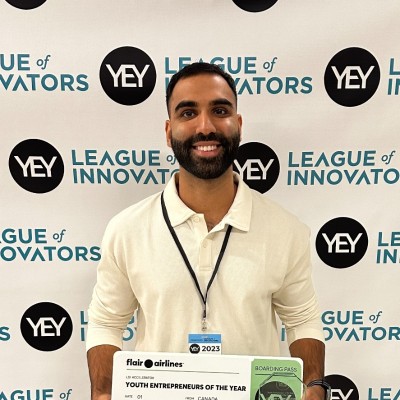
Aanikh Kler
more from this expert
frequently asked questions
How did a venture capital firm cut knowledge retrieval from weeks to seconds?
Lazer built an AI knowledge platform that ingests the firm's call recordings, memos, meeting notes, and CRM records and synthesizes them into a single queryable knowledge base. Instead of asking around for days or weeks, the investment team now queries years of firm memory in seconds.
What AI tools and models power the venture firm's knowledge platform?
The platform uses OpenAI models to synthesize unstructured knowledge, with Recall.ai capturing meetings. It runs on a React and Next.js stack deployed to Vercel across AWS and GCP, with Clerk handling authentication and a mobile dashboard delivered as a PWA.
What results did the venture capital firm see from the AI knowledge platform?
Retrieval that once took days or weeks now resolves in seconds. Two production platforms were delivered, unifying four data sources: calls, memos, notes, and CRM, into one queryable layer. The firm's CEO and management team are active trial users, with rollout expanding into portfolio companies.
How long did it take to build the venture firm's AI knowledge platform?
The build moved from kickoff to production in roughly two to four months, including a mobile dashboard delivered as a PWA at the client's request.
Who is an AI institutional knowledge platform best suited for?
It fits investment firms, professional services partnerships, and other organizations whose edge is institutional memory trapped in meetings, documents, and CRM silos.
Have a similar challenge?
