
Enterprise-Grade AI Software That Scales


Summary
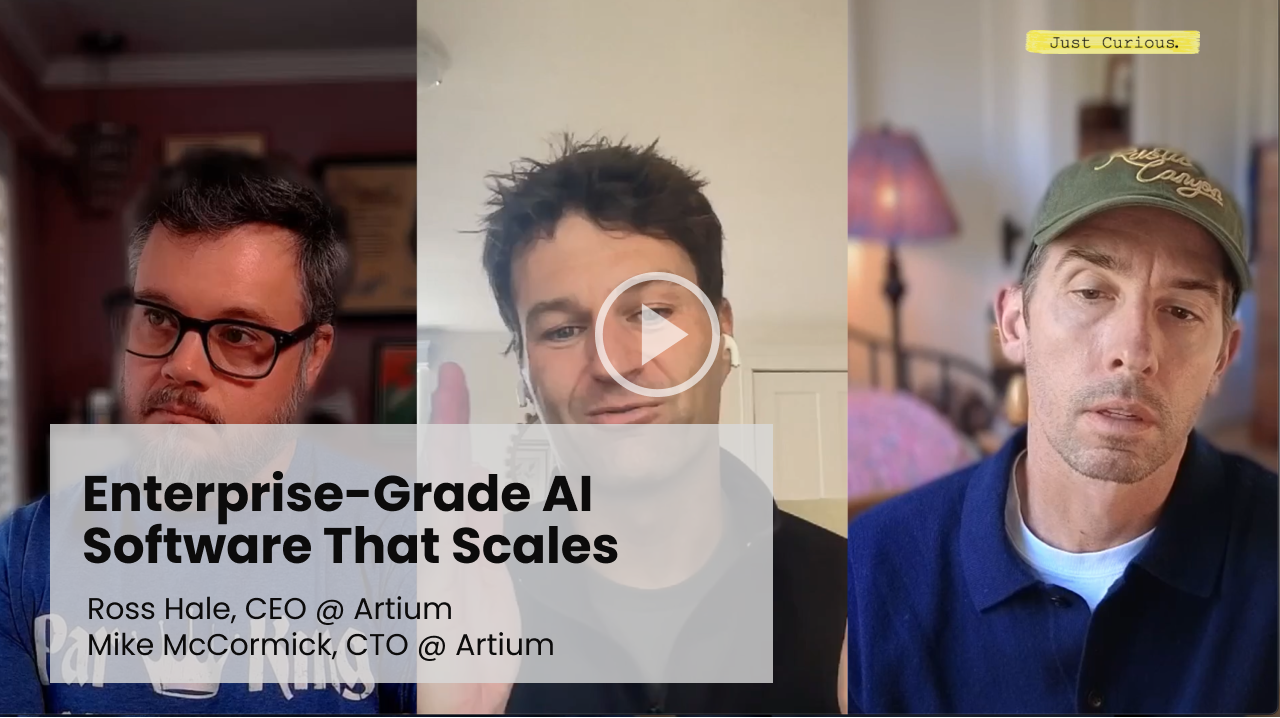
In this conversation, Stu Willson speaks with Ross Hale and Mike McCormick from Artium about the transformative impact of AI on software development. They discuss Artium's unique approach to building AI-powered applications, the current state of AI adoption in enterprises, and the differences between AI and traditional software development. The conversation also covers how organizations can navigate uncertainty in AI projects, turn experiments into business impact, ensure reliability in AI systems, and evaluate the choice between building custom solutions versus buying off-the-shelf products. A case study on Arrive Health illustrates the practical application of these concepts in the healthcare sector.
Estimated Viewing Time
43 minutes
Takeaways
- Artium specializes in AI software development for various industries.
- Companies are moving from experimentation to real AI applications.
- AI software development requires a different approach than traditional methods.
- Proof of concept phases are essential for validating AI projects.
- Stakeholder alignment is crucial for successful AI implementation.
- Continuous alignment testing helps ensure AI system reliability.
- Organizations must evaluate the trade-offs of building vs. buying software.
- AI's increased intelligence opens new possibilities for software solutions.
- The healthcare industry faces unique challenges in AI adoption.
- Smaller, agile teams can achieve more in AI development.
Chapters
- 00:00 Introduction to AI Software Development Leaders
- 02:59 Artium's Unique Approach to AI Software Development
- 06:10 Current State of AI Adoption in Enterprises
- 08:58 Differences Between AI and Traditional Software Development
- 12:12 Navigating Uncertainty in AI Projects
- 15:12 Turning Experiments into Business Impact
- 17:57 Ensuring Reliability in AI Systems
21:03 Building vs. Buying AI Solutions
24:04 Case Study: Arrive Health's AI Implementation

As CEO of Artium, an industry-leading AI Software Development consultancy, I help enterprises build safe, reliable, market-winning AI applications.

.png)
